PPE: The rule is not optional
BY GRETCHEN ANKER
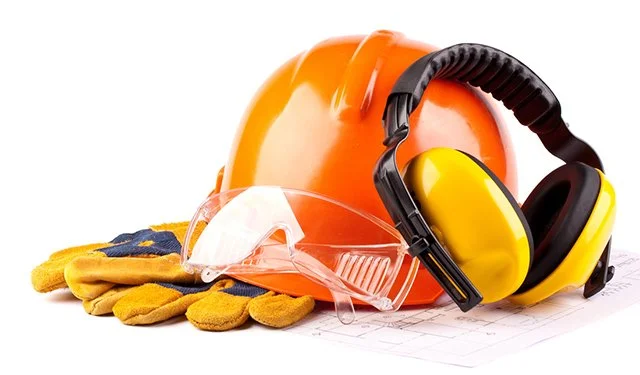
NON-COMPLIANCE with personal protective equipment (PPE) rules is one of the most common forms of workplace misconduct, especially in safety-sensitive environments. In manufacturing settings, PPE may include items such as gloves, masks, respirators, safety boots, eye protection, face shields, hearing protection, protective overalls and, where hygiene controls require it, hair coverings. Earplugs and earmuffs are used in noisy manufacturing settings. For food, pharma, or medical contexts, face masks, gloves, and hairnets are not just protective but mandatory for hygiene and contamination control. Safety helmets or hard hats are among the most commonly overlooked PPE items by employees.
These rules are not cosmetic or optional: they are designed to reduce injury, contamination, and operational risk. But while the rule may seem simple – “no PPE, no work” – dismissals at the CCMA and Labour Court often fail because employers skip key steps in proof, consistency, and communication.
The legal foundation
Under the Occupational Health and Safety Act 85 of 1993, employers must provide and maintain suitable Personal Protective Equipment where workplace hazards cannot otherwise be adequately controlled, and employees must use the equipment provided and comply with lawful health-and-safety instructions. Section 14(b) places a duty on employees to use such protective clothing or equipment as may be provided, while section 14(c) requires employees to obey lawful orders and carry out lawful instructions concerning health and safety.
In practice, this can include gloves, masks, respirators, protective clothing, eye protection, safety footwear and other site-specific protective items required for safety or hygiene reasons. Failure to comply may amount to misconduct, particularly where the risk is serious, the rule is clear, and the non-compliance is repeated or deliberate. However, note that wilful non-compliance vs. inadvertent lapses is important as first-time or accidental failure is usually a warning, but repeated failure could lead to dismissal. Employers should document even first-time lapses to show consistency and awareness-building.
What the CCMA and Courts have said
Failure to wear PPE or protective clothing may constitute misconduct, particularly in dangerous or safety-sensitive environments. In Shanduka Coal (Pty) Ltd v Commission for Conciliation, Mediation and Arbitration (CCMA) and
Others (JR725/15) [2018] ZALCJHB 21 (30 January 2018), the Labour Court considered a disciplinary code that expressly classified “failure to wear protective clothing or to use safety equipment” as misconduct, illustrating the legitimacy of workplace rules that require strict compliance with PPE standards.
As with all misconduct dismissals, however, fairness remains fact-specific. Employers still need to show that the rule was clear, that employees were aware of it, that it was applied consistently, and that the sanction was appropriate in the circumstances. In misconduct cases more generally, prior warnings and progressive discipline may remain highly relevant to the fairness enquiry.
In Sibanye Rustenburg Platinum Mines (Pty) Ltd v Commission for Conciliation, Mediation and Arbitration and Others (JR2402/21) [2025] ZALCJHB 289 (2 April 2025), the Labour Court dealt with a dismissal arising from an employee’s failure to wear a safety harness in a hazardous area, underscoring how seriously noncompliance with mandatory PPE is treated.
Practical guidance for employers
At plant level, ensure:
• PPE rules are clearly communicated, displayed, and signed off.
• PPE rules are incorporated into the disciplinary code and the Occupational Health and Safety Policy so the CCMA sees the policy framework.
• Employees receive training on why PPE matters – not just what to wear.
• Supervisors record and report every instance of noncompliance.
• Supervisors themselves may be disciplined if they fail to enforce PPE rules, showing the CCMA that compliance is organisational, not just individual.
• The progressive discipline policy (warning → final warning → dismissal) is followed UNLESS the risk is life-threatening.
• The PPE policy forms part of your health and safety file and induction materials.
In summary
A single act of not wearing PPE may not justify dismissal, but repeated or wilful defiance of safety rules almost always will. The key for employers is consistency, proof of training, and a documented record of enforcement. PPE policies protect both employees and the company – but only if applied fairly and lawfully.