South Africa’s vehicle industry shines at Dakar
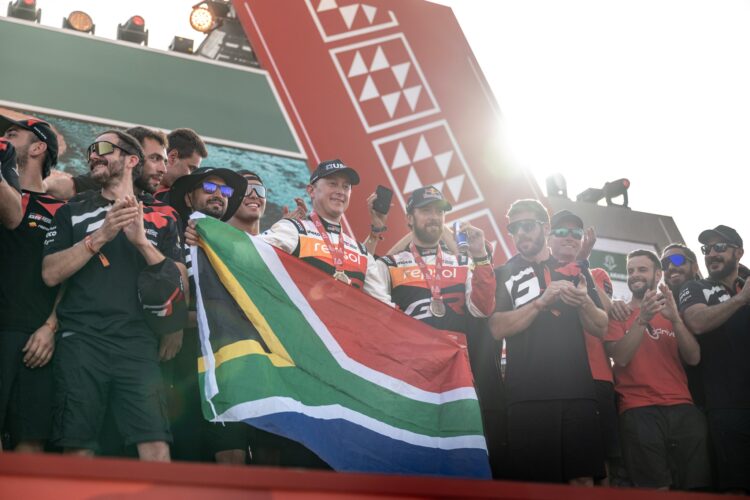
THE 48th edition of the Dakar Rally in January, over nine days over 8,000kms starting from Port Yanbu on the Red Sea in Saudi Arabia, will not only be remembered as one of the most gruelling, testing, challenging and puncture-fraught, but also for the fact that it produced extremely close results. From a South African point of view, the records show that the SA competitors delivered outstanding performances and confirmed that SAmanufactured off-road racing vehicles are on par with the best in the world.
The South African teams Toyota Gazoo Racing and Century Racing garnered seven places in the top 20 of the cars category, which is an exceptional result for the off-road rally business in South Africa.
The event tested competitors and their teams to the max and they showed pure grit and determination to be able to survive in extremely harsh conditions. The race is more than just a contest of speed and endurance, it’s a showcase of local engineering excellence, home-grown rally culture and competitive spirit.
South African-prepared cars, bakkies and off-road machines have become cornerstones of the Dakar entry list. In recent rallies, more than half of the cars competing in the top Ultimate (formerly T1+) class have been designed, developed or built in South Africa (including the top-performing Toyota Hiluxes and Century CR-7s), a testament to the depth of expertise in the country’s rally raid industry.
This makes South Africa not just a source of competitors but also a global automotive rally hub.
South African-built Dakar cars typically feature advanced, lightweight plastic composites (specifically carbon fibre reinforced plastic) for optimal performance. These high-performance machines frequently utilise carbon fibre-reinforced plastic (CFRP) to reduce weight while maintaining structural integrity for extreme off-road conditions. CFRP is used for body panels, front lids and rear wings to keep the vehicles as light as possible, as seen in the Porsche 911 Dakar and other rally-prepped cars. However, while lightweight, these plastic-based materials are designed to withstand extreme, high-speed desert conditions and obstacles.
Ultimately, South Africa’s footprint in the 2026 Dakar Rally is unmistakable. From South African-prepared Toyota Hilux and Ford Ranger/Raptor cars to locally assembled Volkswagen Amarok entries and top-flight Century Racing cars, South African rally craft are integral to the heart of the Dakar.