From raw material to final product: A complete approach to polymer characterisation
POLYMER performance is rarely determined by a single property. From the quality of raw materials and additives to processing conditions and final mechanical performance, every stage can influence the finished product’s quality, consistency, and functionality. For polymer manufacturers, compounders, processors, and research laboratories, this creates an important challenge: How do you fully understand your material rather than relying on one measurement alone?
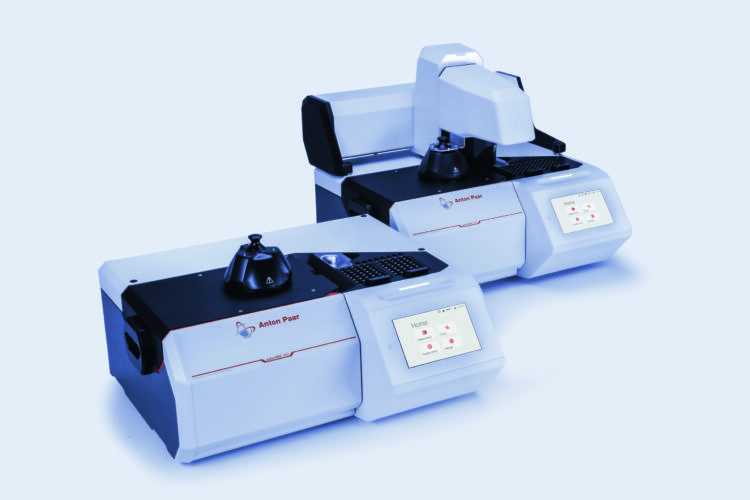
Anton Paar provides complementary analytical technologies that support polymer characterisation across the value chain – helping laboratories move from simply measuring materials to understanding how composition, structure, processing, and performance are connected.
Start with the raw material
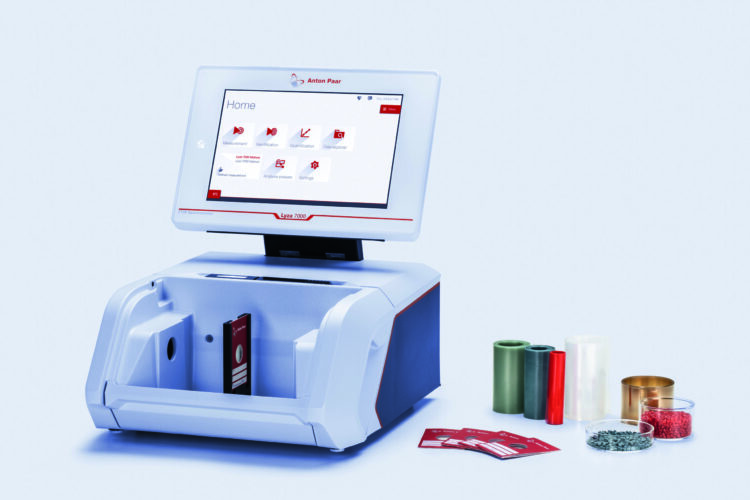
Reliable polymer production begins with understanding what goes into the formulation. Raw polymers, powders, fillers, pigments, and additives can all influence processing and final product properties. Particle size, shape, density, and powder behaviour may affect dispersion, flow, packing, and ultimately the consistency of a formulation. Anton Paar’s Litesizer series for particle characterisation and Ultrapyc gas pycnometers for true density measurement provide valuable insight into these starting materials. Chemical identification adds another layer of understanding. With Lyza FTIR spectroscopy, laboratories can identify and verify polymer materials, investigate unknown samples, compare incoming raw materials, and support quality control.
Understand processing behaviour
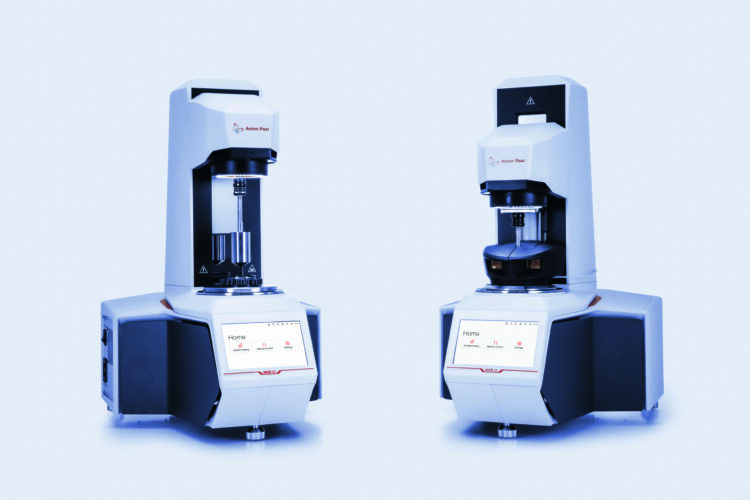
Once a formulation is established, the next question is how it behaves during processing. Rheology plays a critical role in polymer applications because flow and deformation influence extrusion, injection moulding, coating, and compounding. Anton Paar’s MCR rheometer series allows manufacturers and researchers to investigate the rheological behaviour of polymer melts and other complex materials. This information helps optimise processing conditions, compare formulations, investigate batch variations, and understand the effects of fillers and additives. The result is a more connected approach: formulate, process, measure, adjust, and optimise.
Explore what happens under temperature
A polymer that performs well at one temperature may behave very differently at another. Thermal analysis is therefore an essential part of understanding polymer performance. Julia DSC enables differential scanning calorimetry measurements for investigating important thermal characteristics such as glass transition, melting, and crystallisation. When DSC results are combined with rheological data, laboratories gain complementary information about both thermal transitions and material behaviour.
Go beyond processing to final performance
Successful processing does not automatically guarantee a successful final product. Polymer components, films, coatings, and composite materials may also need to meet specific requirements for mechanical and surface performance. Anton Paar’s surface and mechanical characterisation solutions enable property investigation such as scratch resistance, indentation, friction, wear, and coating performance. This allows manufacturers to connect decisions made during material selection and formulation with the performance of the finished product
One material. Multiple perspectives.
The greatest insight often comes from combining complementary analytical techniques. FTIR tells you more
about chemical identity. Particle and density measurements characterise raw materials. Rheology reveals flow and deformation behaviour. DSC investigates thermal transitions. Extrusion explores processing conditions. Mechanical and surface testing evaluates final performance. Together, these technologies create a connected analytical workflow that supports research and development, quality control, troubleshooting, formulation optimisation, and production.
From raw material to finished product, discover the complete story behind your polymer
Get the free e-Book for Anton Paar Polymer processing: https://bit.ly/465eB4O or enquire today: https://bit.ly/465nc7G