
Tuffy’s as tough as they come, still going strong after 40 years
YOU need to be tough to survive in business and even tougher to succeed. Over four decades, Tuffy has proved it has what it takes.
Founded in 1986 as a supplier of refuse and food storage bags, as well as various other retail goods such as wraps, clothes pegs and brooms, Tuffy grew steadily and, before purchasing its main supplier, Uniplastics, which manufactured the bags sold under the Tuffy™ brand. That proved to be an insightful purchase by Tuffy’s Jonathan Duffet, marking the business’s entry into manufacturing. The beating heart of Tuffy was and remains its production plant, which was the Uniplastics production plant run by the now-retired Sam Sampson and Dick Lowrey in Cape Town. Engineers by trade, the duo had been among the first to make bags out of recycled material, due to its competitive edge on price.
Purchasing Uniplastics was intended to ensure supply continuity, and Tuffy’s market penetration grew further, to the point where it is now the number two manufacturer of garbage bags in South Africa (including bin, drawstring, fragrance, sandwich, freezer, and zipper bags).
The main product initially was agricultural sheeting – mulch films – but the ‘new’ Tuffy quickly got into refuse bags – supplying municipalities for many years. As Tuffy grew, the B2B element dwindled, and, over the years, the business has focused on the Tuffy brand, expanding the brand from refuse bags to aluminium foils, freezer bags, zipper bags, and clingwraps. Tuffy is also a DOB specialist, supplying many of the private labels in South Africa.
Highlights
One of the highlights for Tuffy has been its in-house ability to retrofit machinery to successfully run high levels of postconsumer waste (PCW) material. It is certified at 75% PCW. Developing the technology to run recycled material set the company apart at the time.
From a retail perspective, Jonathan built the Tuffy brand, and the engineering knowledge of Lowrey and Sampson is what set Tuffy on course. The fact that most of the equipment was built in-house by the team led by Lowrey and Sampson was key to the success of the venture. Lowrey and Sampson developed the technology to run recycled material, which would likely have incurred substantial expense if sourced overseas. That ability and attitude still pervade the Tuffy team.
“This has been part of our DNA since day one. It is the backbone of our brand, and it drives our purpose,” said Tuffy business unit manager Rory Murray.
Murray added: “An 18-micron, quality product is a difficult thing to get right, considering the raw material input. This has been our strength. We stretched this ability in the carrier bag segment and produced the first carrier bag in SA manufactured from 100% recycled material. This was at a time when the rest of the industry said it was impossible. Now all carrier bags carry some environmental message, so it could be said that Tuffy dragged this segment into the recycled material space.
“Then, growing the Tuffy brand into a well-recognised one was obviously a highlight too. We are currently working on exporting the brand into the North American market – exciting reception of our brand proposition. We were the first refuse bag to be certified as being made from 100% recycled material, and with a 75% PCW level – worldwide.
When Tuffy approached SGS (standards certification body) to accredit its bags with recycled content, the feedback was that SGS would have to work with Tuffy to draw up a certification methodology as it didn’t exist. Tuffy pioneered this with a team from the east.
“The main highlight, if I can call it that, is that we have remained true to our proposition, in a segment that is rife with greenwashing. We have always held our standards true, hence our certification process,” said Murray.
What does the future hold?
The in-house capabilities on machining have been extended to the testing of incoming raw materials and achieve predictable batch processing.
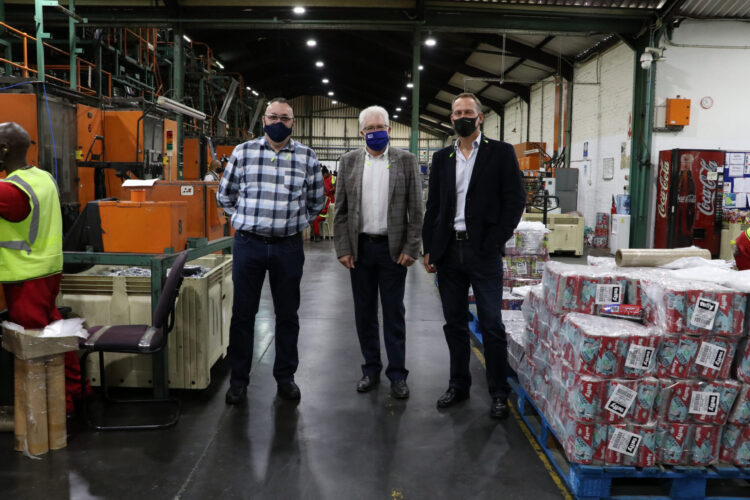
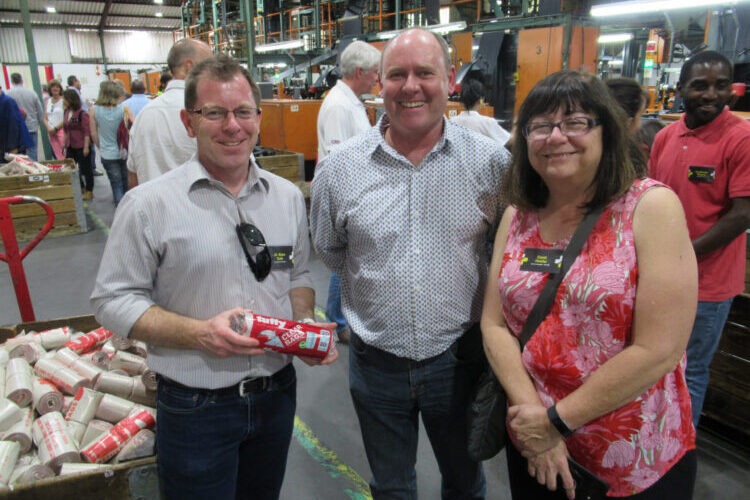
Today, the Tuffy factory in Bellville Industrial is a model of continuous operation, with much of its machinery built in-house.
“The near-term future for Tuffy is to grow the brand into adjacent segments that make sense and to secure the brand on retail shelves in offshore markets,” concluded Murray.