

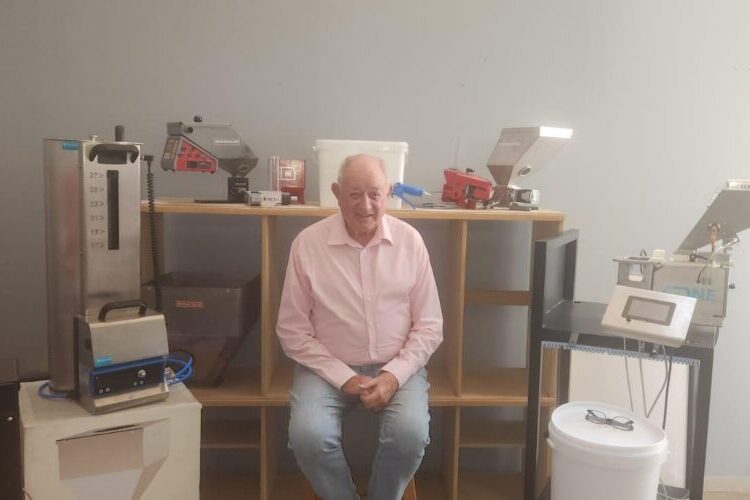

Banbury celebrates over 30 years in the industry
FOR over 30 years, Banbury Plastic Solutions has been a trusted partner to the plastics industry, delivering innovative, high-quality solutions to manufacture plastic products and containers across a wide range of sectors. The motivator behind the venture, Brian Sinclair, studied quality assurance auditing and went on to qualify as a Systems Auditor specialising in ISO Standards.
Brian first got involved in the industry when he joined MCG Industries in Johannesburg as Quality Assurance Manager. This gave him his first real exposure to the industry and laid the foundation for the career that followed. At the time, MCG was one of South Africa’s leading crate manufacturers, providing Brian with a solid grounding in plastics manufacturing. A few years later, he moved into the material supply sector when he was given the opportunity to join Polyrem in a sales role. Polyrem, which later became part of Clariant, was at the time one of the country’s leading masterbatch suppliers.
With the journey for the then-young Sinclair still underway, the next stop was Ciba, a Swiss manufacturer and supplier of a wide range of masterbatch products. Brian then got involved in sales for the Ciba Pigments and Additives division, where he gained further world-class experience in the industry.
“These roles allowed me to build both my technical knowledge and commercial experience within the plastics industry. Then, in 1995, after more than 20 years in the industry, I decided to take the next step and establish my own company, Banbury Chemicals,” stated Brian.
Banbury specialises in precision colour-matching, advanced dosing systems, purge solutions, and has a comprehensive portfolio of technical products designed to meet the exacting standards of today’s production environment.
Brian explained: “The suppliers Banbury represented were carefully selected around opportunities I saw developing within the plastics industry. At the time, PET was becoming increasingly important as an alternative to materials such as glass, which created new challenges and opportunities – particularly when it came to introducing colour accurately and consistently into PET processing.
“One of my key focuses became dosing technology. Although several dosing systems were available at the time, we chose Movacolor because I believed its technology offered an effective and accurate way of dosing colour consistently into the production process”.
Masterbatch was another important part of the solution. Using the correct carrier and moving towards solid masterbatch rather than liquid colour offered a cleaner and more controlled approach to colouring plastics.
Highlights
To Brian, one of the biggest highlights has been seeing Banbury grow and evolve over the past 31 years. There are multiple achievements he is extremely proud of, including the long-standing relationships built with customers and international suppliers, the introduction of new technologies to the Southern African plastics industry, and the development of a strong team that shares the same commitment to service.
Banbury focuses on solutions that help plastics processors operate more effi ciently, reduce waste and improve their environmental impact. Just as importantly, Banbury has built a team that understands the industry and is committed to supporting customers – not only by supplying products, but through technical knowledge, service and ongoing support.
Agencies
Today Banbury represents Movacolor of Holland (colour dosing systems), Ferlin, Holland (specialised mixing and transport), Blue Air Systems of Austria (material drying and cooling solutions), Polytec Masterbatch of Dubai, and EasyPurge of Spain.
Banbury has shifted almost seamlessly into the area of specialised processing, offering solutions across dosing, blending, material handling, drying, purging and masterbatch.
Impressions of the market
Brian believes that while the plastics industry continues to grow, there is still a significant opportunity to improve quality and efficiency through better technology.
Energy-efficient drying systems, accurate dosing of colour and masterbatch, improved raw-material handling and better control of moisture and fines can all help manufacturers reduce waste, rejected products and unnecessary costs.
“The future of the industry will depend on continuing to improve the way we process plastics. By investing in efficient technology, better quality control and more environmentally responsible production methods, I believe the plastics industry has a strong future ahead of it,” concluded Brian.